Here is a jazz tale, created with equal parts of verified facts and educated conjecture. It is a summation of what may have happened during the composition, adaptation and reconstruction of a well-known jazz standard. It is not designed as a definitive account nor an accusation against long-dead icons; rather, it is an attempt to set the historical record straight and to shed light on one of jazz’s greatest composers. The musicians involved were part of a tight clique who explored the possibilities of bebop in New York City during the mid-to-late 1940s.
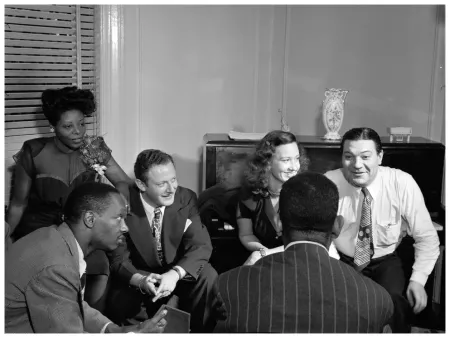
Pianist Mary Lou Williams was undoubtedly the finest female jazz instrumentalist of her time. She came to prominence in Andy Kirk’s 12 Clouds of Joy. She was a member of Kirk’s Kansas City-based band from 1929-1942, and during that time she developed into a first-class composer and arranger. Soon after leaving Kirk, she moved to New York, where her uptown apartment became an informal salon for musicians interested in modern jazz. Coleman Hawkins attended Williams’ workshops in those days. He was the first giant of the tenor saxophone, and like Williams, he was a veteran of the big bands. For a dozen years, Hawkins was one of the star soloists in the Fletcher Henderson Orchestra, and he influenced generations of saxophonists. His advanced command of chromatic harmony was far beyond most of his contemporaries, and as the beboppers began expanding chord structures, Hawkins became a spiritual godfather to the movement, recording and performing with many of the young lions. One of those musicians was Thelonious Monk. He played at the 1941 jam sessions at Minton’s Playhouse, where bop experiments occurred on the bandstand. In 1944, Hawkins hired Monk as the pianist for his quartet, and it was with Hawkins that Monk made his first issued recordings. Monk was an emerging composer, and by the time of his tenure with Hawkins, two of his originals had been recorded by Cootie Williams and his Orchestra. Williams listed himself as co-composer of “Round Midnight” while drummer Kenny Clarke took partial credit for “Epistrophy”. We don’t know the exact amount of music that Williams and Clarke contributed to the final compositions, but both men were able to have the songs published, copyrighted, and available for royalties. As we shall see, this process was a major component of our story.
On December 15, 1944, Coleman Hawkins and Mary Lou Williams made their only joint recording in a session for Asch Records. The last song they recorded was an original line based on the chord changes of George Gershwin‘s “Oh, Lady Be Good”. The tune opened with an arching two-bar motive which was immediately repeated, followed by a shortened version of the same idea (also repeated) followed by a contrasting motive. The total eight-bar pattern was repeated. The bridge had no melody at this time, so Hawkins improvised over the changes. The chorus ended with a reprise of the opening eight-bar strain. Musicians refer to this common song form as AABA, with each letter standing for an 8-bar strain. Hawkins and trumpeter Bill Coleman played the melody in unison, so there was no need for an arrangement. The only written music would have been a handwritten lead sheet.
Couldn’t be easier, right?
Wrong.
This recording set off several controversies. Williams, Hawkins, and Monk all claimed to have composed and/or arranged this simple tune. In an interview, Williams complained that musicians stole her original music all the time, and she correctly noted that on an earlier occasion, Monk had lifted part of her tune “Walkin’ and Swingin’” for his song “Rhythm-a-Ning“. Linda Dahl, one of Williams’ biographers, claimed that the “Lady Be Good” contrafact was just another example of this nefarious practice. However, the Institute of Jazz Studies at Rutgers University—which holds Williams’ collection and personal effects—has only one sheet of music labeled “Lady Be Good”. That piece of manuscript paper appears to be part of a big band arrangement with no connection to the 1944 recording. Another Williams biographer, Deanna Witkowski, assured me that in her extensive research she did not find any manuscripts relating to this piece. In fact, no original manuscripts or copyright deposits for this song have surfaced, even amongst the holdings of the Library of Congress or the US Copyright Office.1 According to Monk biographer Robin D.G. Kelley, Hawkins’ daughter claimed that her father had composed this piece from top to bottom. Again, there is no physical evidence to back up her statement. That leaves Monk, who stated unequivocally that he had composed the main strains of the song. There are several clues that point to Monk as the primary composer.
The first evidence in Monk’s favor may be circumstantial, but it is a likely scenario considering the individuals involved. Mary Lou Williams and Coleman Hawkins were old hands in the studio. Both knew the process of recording discs, and as composers, they knew that when recording an original work, the producer—in this case, Moe Asch—would ask, “What is the name of that song?” and “Who wrote it?” If Williams or Hawkins had written the tune, they would have certainly spoken up. Unfortunately, Monk was not in the studio to answer for himself. Asch eventually issued the recording as “Lady Be Good” even though he and everyone else involved knew that the song had no relationship to the Gershwin standard, except for the uncopyrightable chord sequence. Why did Asch release the song with the wrong credits? Probably because no one supplied him with the correct title or composer. Imagine Asch’s confusion when he was told that the (possibly still-untitled) song was composed by a little-known pianist with a very strange name. Either Williams or Hawkins might have promised Asch that they would phone him with the information, but apparently, that never happened. To bolster Monk’s claim, an anonymous staff member at BMI confirmed to me that Monk was not yet a member of BMI or ASCAP in 1944 and as a result was unable to collect royalties. Since royalties were the main incentive for the just-ended recording strike by the American Federation of Musicians, Asch may have decided not to aggravate the musician’s union by releasing a track for which royalties could be neither paid nor collected.
On February 23, 1945 (only nine weeks after the Williams date) Hawkins brought his new quintet—without the recently departed Monk—into the Los Angeles studios of Capitol Records. One of the tunes was the “Lady Be Good” contrafact, now titled “Rifftide” and according to the label, composed solely by Hawkins. The song now included a written bridge plus a 32-bar shout chorus. Hawkins was certainly the composer of the new material, but if he was the sole composer of the song, there was no need for him to write any extra music. Capitol probably insisted on copyrighting and publishing the song, so it is possible that Hawkins composed the extra material to justify the label credit.2 Additionally, if Monk was still ineligible for royalties, the sole credit might have been the easiest work-around for the label. Before we leave the Capitol recording, listen to the introduction for rhythm guitarist Allan Reuss. Guitarists were being phased out of jazz rhythm sections at this time. Reuss was a veteran of the Benny Goodman orchestra, and through his superb—but dated—timekeeping, Reuss links this performance to the swing era. The next major recording brought “Rifftide” into the bop era—albeit with a different title.
Fats Navarro was a brilliant young trumpeter who died at the age of 26 due to a heroin addiction. In his short career, he performed with many of the greatest musicians from the swing and bop worlds, including Andy Kirk, Billy Eckstine, Lionel Hampton, Coleman Hawkins, Charlie Parker, Kenny Clarke, Dexter Gordon, and Howard McGhee (the trumpeter on the Hawkins quintet recording above). His greatest collaborations were with the elegant composer/arranger Tadd Dameron. Navarro’s singing tone provided the perfect lead voice for Dameron’s gorgeous arrangements. Navarro was already a member of Dameron’s sextet when he recorded a session for Savoy on December 5, 1947. Dameron was at the piano, with Charlie Rouse (later part of Monk’s quartet) on tenor, Nelson Boyd on bass, and Art Blakey on drums. “Rifftide” was probably scheduled as the final selection to record, but someone at Savoy—either label president Herman Lubinsky or producer Teddy Reig, neither of whom liked to pay royalties to artists not on the Savoy roster—must have demanded changes to the melody, along with a title change, and a composer credit for Navarro. The trumpeter’s ornate variation did not fool anyone, but it did include an interesting addition. For the first time, we hear an extra note on the second half of beat two in the fourth bar of the A sections. When set within the song’s harmony, it is a flatted fifth, a signature part of bebop. Unexpected accents were also a key element of the bop style, and the combination of these two elements—all found in a single note!—turned “Rifftide” from a swing anthem into a bop tune. (For this discussion, we will refer to this note as the “bop note”). Due to the melodic ornamentation in the newly christened “Fats Blows”, we don’t capture the full effect of the bop note’s impact.
Navarro never recorded or performed the “Fats Blows” melody again, but on two 1948 broadcast recordings of the Dameron group playing “Rifftide” (one with Navarro and one without—and both issued as “Lady Be Good”!) drummer Kenny Clarke adds punctuation to the bop note.
In May 1949, Dameron was invited to lead a group at the Paris International Jazz Festival. The front line featured Miles Davis and James Moody on trumpet and tenor, respectively, with a rhythm section of Dameron, Clarke and expatriate bassist Barney Spieler. The opening of “Rifftide” is obscured by the incessant ramblings of two French radio hosts, but as the band starts, we can hear the horns and Clarke accenting the bop note. Later in the track, Davis and Moody offer burning solos to a very enthusiastic crowd.
It seems that Coleman Hawkins was one of the few musicians who didn’t know about the bop note. On a Jazz at the Philharmonic concert recorded at Carnegie Hall on February 11, 1949, Hawkins appeared with Navarro, and they opened their set with “Rifftide”. Close listening to the opening chorus reveals that Navarro hits the bop note with gusto every time, especially when he realizes that Hawkins is not playing it at all. When they return to the melody, Hawkins is onboard with the bop note, as is drummer Shelly Manne, whose accents add extra emphasis.
Hawkins remembered the addition, and when he returned to JATP and Carnegie Hall on September 18, 1949, he inserted and emphasized the bop note.3 In December 1949, Hawkins toured Europe fronting a band with trombonist Nat Peck, alto saxophonist Hubert Fol, tenor saxophonist James Moody, pianist Jean-Pierre Mengeon, bassist Pierre Michelot, and drummer Kenny Clarke. At concerts recorded in Lausanne and Munich, the band played a new arrangement of “Rifftide” with Hawkins’ bridge presented antiphonally (the horns were split into two groups to bounce the same motives back and forth). On a June 7, 1950 Paris studio date led by Clarke for Swing Records, the same band—minus Hawkins and with a young Gerry Wiggins replacing Mengeon—played the same chart. Somehow the recording was issued as “Be a Good Girl” or “Be Good, Girl” (the reissue titles differ). Once again, everyone involved knew the proper title and the credited composer, but someone at Swing changed the title (and possibly the composer credit as well; I have not found an image of the 78 label to verify) just to save a few francs on royalties.
In 1954, Thelonious Monk decided to reclaim “Rifftide” by composing and recording a new version titled “Hackensack”. It is possible that “Hackensack” was what Monk submitted to Hawkins 11 years earlier. We can be sure that in composing his revision, Monk removed all of the parts that he did not write and/or did not like and replaced them with original material. “Hackensack” starts with the same motive as “Rifftide” but halfway through the first repetition, the phrase changes direction when it is interrupted by an accented dissonant chord. This chord is Monk’s answer to the bop note, but he moves it by a half-beat, so it lands directly on the second beat. The sudden change in timbre sets up the next change. For the next two bars, the band omits the three pick-up notes and plays only the top two notes of the original motive, but at full volume. This simple gesture lets Monk identify and emphasize these key notes. On most versions, this motive is played in parallel thirds, but on this premiere recording, Monk allowed tenor saxophonist Frank Foster to add a third harmony part at the augmented fifth. Foster’s high-register squeals may have sounded avant-garde in 1954, but they make Monk’s point! In the bridge, Monk distills Hawkins’ arpeggios with a skeletal outline of the harmony with syncopated piano chords. He leaves the final turnaround as it was in “Rifftide”. For his solo, Monk sticks to the melody through most of the first chorus before moving into a delightful improvisation. Foster solos next but listen in the background for Monk’s animated comping. This session for Prestige Records, held on May 11, 1954, marked Monk’s first visit to the studio of engineer Rudy Van Gelder, which was located in the living room of his parent’s home in Hackensack, New Jersey. Monk was intrigued by the home studio’s casual atmosphere and by Van Gelder’s impressive collection of recording equipment. He named the new song to commemorate the studio, its contents, and its location.
About three weeks after the Van Gelder session, Monk was in Paris, where he recorded “Hackensack” as a solo piece. We can be sure that both versions of Monk’s new tune had been released by July 17, 1955, when Monk joined Miles Davis, Gerry Mulligan, Zoot Sims, Percy Heath and Connie Kay for a jam session on the first day of the Newport Jazz Festival. “Hackensack” was the opening tune, but Monk was the only member of the band playing the revised melody. Everyone else played “Rifftide” in the same manner as Coleman Hawkins. Monk held his ground, but he must have felt underappreciated as there was no valid reason for his fellow musicians not to play the new melody.
Apparently, Monk did not have legal protection for “Hackensack”. A thorough search at the Library of Congress and the US Copyright Office failed to produce any definitive proof of a copyright deposit or application. Prestige should have filed the paperwork soon after the May 11, 1954 session. The only tangible reason for holding back the copyright application was the similarity of the two melodies. They needn’t have worried about legal action: Hawkins accepted the changes, and in a 1959 recording from the Bayou Club in Washington DC, he and trumpeter Roy Eldridge inserted the parallel thirds from “Hackensack” into “Rifftide”. The only copyright I have found for “Hackensack” was filed in 1978 and included in Don Sickler’s book of Monk compositions. By then, Monk was a longtime member of BMI, so he was eligible for royalties, despite the copyright issues.
Monk recorded “Hackensack” at least twenty times, usually in concert and nightclub recordings. To my ears, his best live version is the April 1961 performance at the Olympia Theatre in Paris. Monk’s quartet—with tenor saxophonist Charlie Rouse, bassist John Ore, and drummer Frankie Dunlop—swings mightily, and the soloists improvise with focus and direction. It is far better than the bouncy studio version recorded for Columbia in November 1962.
The piano-less quartet of Pee Wee Russell and Marshall Brown covered the song for a 1963 LP on Impulse, and while neither principal soloist displayed a deep appreciation for Monk’s harmonies, they played the composition nearly as written with the chorded sequence from the bridge being the only omission.
Since Monk’s death in 1982, several jazz artists have recorded “Hackensack”, and no matter how experimental the setting, they remain true to Monk’s 1954 composition. Chick Corea’s trio version recorded at “The Country Club” in Reseda, California (a suburb of LA) features a fluid rhythm from master drummer Roy Haynes, fine arco and pizzicato bass by Miroslav Vitous, and intriguing piano solos from the leader. Tom Harrell‘s 1989 collaboration with pianist Ted Rosenthal, bassist Ron Carter, and drummer Billy Higgins is notable for excellent solo work and outstanding ensemble. The recording was made for a Japanese label, but you can listen here. The progressive versions of “Hackensack” by Andy Summers and Clarence Penn deconstruct Monk’s melody without damaging its integrity. Organist Joey DeFrancesco and drummer Peter Erskine power the Summers recording, while tenor man Chad Lefkowitz-Brown and pianist Donald Vega enrich the Penn version. In the last years of his foreshortened life, pianist Frank Kimbrough recorded every composition of Thelonious Monk. His quartet version of “Hackensack” with tenor saxophonist Scott Robinson, bassist Rufus Reid, and drummer Billy Drummond sets a high standard for all other versions to match.
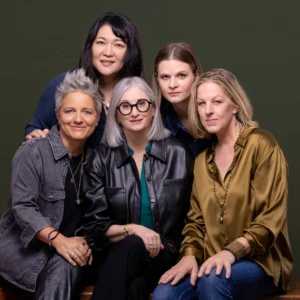
My favorite version of “Hackensack” is one that you cannot stream or buy. It is an outstanding arrangement by Renee Rosnes for her supergroup Artemis. I have heard this chart on several occasions, and each performance introduces new elements. It is a constant inspiration for the band, and I doubt that they will record it until they finalize all the parts. And frankly, I hope they don’t rush this one onto a CD. I attended Artemis’ sets at Baltimore’s Keystone Korner on Saturday, March 28, 2026, and through the courtesy of Todd Barkan and his staff, I received video recordings of the complete sets from that night and the next. Comparing the two versions of this setting displays the rich flexibility of the music and its performers. Rosnes always starts this arrangement with solo piano. On Saturday, she opened with an extended fantasia, but on Sunday, she started right on the melody. Drummer Allison Miller cued in the horns by rattling her snare rims, and the horns played the melody with minimal accompaniment. In between the phrases, the horns added a puckish Monk figure (which I believe was a new addition). In her solo, trumpeter Ingrid Jensen coupled her rich tone with an odd selection of notes which wandered through the intricate harmonies in a unique way. On Saturday, Rosnes did not play during the trumpeter’s first chorus, but on Sunday, her comping was intermittent and slightly more insistent. On Saturday, Nicole Glover‘s tenor solo started with a half-time tempo shift and a descending chord pattern. When the original tempo returned, Noriko Ueda and Glover went into an intriguing duet as Glover created lines with unusual phrase lengths against Ueda’s 4/4 walk. Rosnes and Miller returned as Glover capped her stunning solo. On Sunday, the tempo remained constant and the rhythm section supported her throughout. As before, Glover’s ideas were carefully developed, but she swung harder this time around. On both nights, Rosnes’ solos drew from the energy of Glover’s inventions before taking a new creative path. Rosnes usually finds her way to quote at least one of Monk’s other tunes—on Sunday, it was “Thelonious”, but on other performances, I’ve heard her spin out a handful of Monk quotes. Ueda typically plays an extended bass solo in the next spot, but on Sunday, she jumped right into a series of open exchanges with Miller. As always, there was great humor and chemistry between these two wonderful players. For the recapitulation, Rosnes transcribed and adapted the second chorus of Monk’s piano solo from the 1954 Prestige recording, and that passage segued into a cleverly designed coda that was both a reprise and a variation. Artemis plays this arrangement every night. I can’t share the Baltimore videos here, but I highly encourage everyone to catch Artemis live or on a livestream to hear this music as it is created. The arrangement may sound quite different from what I have just described.
During a 1985 jazz history survey course at the University of Northern Colorado, I grimaced when a graduate student—who should have known better—prefaced his lecture by saying Monk is just weird! No, Thelonious Monk was one of the greatest composers that jazz has ever known. His masterful technique of developing small motives can be seen in his transformation of “Rifftide” into “Hackensack”. His approach to the piano was labeled “wrong” by writers, teachers and jazz fans who should have realized that his technique was completely right for his music. Monk’s genius went unappreciated for years, and it is a shame that his death was a primary motivator for people to understand his music. Monk deserves the sole composer credit for “Rifftide” and “Hackensack” (not to mention “Be (a) Good Girl”!) May the misattribution of these compositions end here and now.
____
1 The only copyright deposit for “Rifftide” in the Library of Congress is for a 1977 vocalese version. It uses the original melody (without the bop note) and credits the work to Coleman Hawkins. The lyrics are by Steve Graham. Hawkins had been dead for eight years when this version was submitted for copyright.
2 During the Swing Era, many bandleaders took a songwriting credit in exchange for making the song’s debut recording. Hawkins did not do this very often, but the online ASCAP/BMI Songview database lists Hawkins’ name on a few Monk compositions, so he probably did this a few times before Monk joined BMI. I have serious doubts that Hawkins held back royalties from Monk; my guess is that the payments were made “under the table”.
3 On a Verve CD reissue of this track, someone included the erroneous annotation “aka Disorder at the Border”. “Rifftide” has no relationship to “Disorder” and the last thing this song needs are more alternate titles!
____
Dedicated to Renee Rosnes and Nicole Glover of Artemis. Our brief, but lively, discussions backstage at the Keystone Korner inspired this article. Extra kudos to Renee for her stunning arrangement of “Hackensack” and for steering me to Don Sickler’s book of Monk compositions.
Deepest appreciation to the wonderful staff of the Performing Arts Reading Room at the Library of Congress, especially the outstanding researcher Morgan Davis, and the helpful and patient Cait Miller.
Thanks to Leanne Fallon of the Free Library of Philadelphia for providing information from the Linda Dahl biography of Mary Lou Williams. Thanks to Deanna Witkowski for her confirmation regarding “Rifftide”. Additional thanks to Todd Barkan and Cheryl Goodman of the Keystone Korner in Baltimore for allowing me to see Artemis in person and for providing video reference recordings of the Artemis performances.
Special thanks to Bonnie Loudermilk for a last-minute refresher on jazz harmony theory!
And regarding that ultra-rare Swing 78, here’s to those who searched but did not find: Vincent Pelote of the Institute of Jazz Studies at Rutgers University, Matt Rivera of WKCR and the Hot Club of New York, Scott Wenzel of Mosaic Records, Harrison Behl of the Library of Congress, David Seubert of the University of California (Santa Barbara) plus student library staffers at Indiana University, University of California (Santa Barbara) and the University of North Texas. Be diligent, friends: we WILL find this record one day!
____
The recordings embedded in this article are presented for educational and illustrative purposes. Jazz History Online neither owns nor controls the rights to this material. All rights belong to the original copyright owners.