Sammy Davis, Jr. was a consummate entertainer. Equally talented as a singer and dancer, Davis could have made a career with either specialty, but when he combined the two disciplines—as in his late-career masterpiece, “Mister Bojangles”—he was a force of nature. If that wasn’t enough, he was a fine actor on stage and film, a skilled impressionist, and an amateur jazz musician. Davis was one of the first black artists to imitate white performers in public—and his subjects appreciated his efforts: Humphrey Bogart gave Davis private tutelage to improve his impersonation, and Nat King Cole played along when Davis mimicked him on nationwide TV. Those whose lived during Davis’ lifetime saw him on stage or on late-night talk shows and listened to his LPs, but today’s audience, scrolling through videos on YouTube, might be offended by his concert films with the Rat Pack, as they contain racist humor, some uttered by Davis himself. The streaming services offer a better survey of Davis as a pop and jazz singer, especially when searching for his recordings on Decca and Reprise.
Sammy Davis, Jr. was born in Harlem on December 8, 1925. By the age of 3, the precocious child went on tour with his father, Sam, Sr. and Will Maston (the man Sammy, Jr. called his uncle). The song-and-dance duo soon became a trio as Sammy, Jr.’s talents manifested. In 1933, he appeared in a short film “Rufus Jones for President”. Davis steals the show from Ethel Waters and mugs his way through a swamp of racial dialogue. Yet, the film redeems itself for a magical 76 seconds in Davis’ rendition of “I’ll Be Glad When You’re Dead, You Rascal You” which reveals an astonishing appreciation of Louis Armstrong.
Because he grew up on the road, Sammy Davis, Jr. never enrolled in a public school. His ability to read and write came many years after other boys his age, but later in life, he tried to fill the gaps in his education through books and movies. Similarly, his training in music was random at best, and more situational (when that happens, do this) than general (a basic knowledge of musical forms or harmony). He neglected his voice with a constant barrage of cigarettes, alcohol and illicit drugs. With only the most rudimentary technique, he played trumpet, vibes, piano and drums in concerts and on television. Videos of these jam sessions show that Davis was uncomfortable improvising over chord changes and that he could even lose his place within a 12-bar blues. But just as he improved his general education, Davis listened and learned about jazz through the great artists of his generation. He owned around 4000 LPs (and reportedly traveled with them). Davis developed into an exciting and original vocalist situated on the precipice between jazz and pop. In late 1960, Davis signed a contract with Frank Sinatra’s new label, Reprise. On the suggestion of his friend, Mel Tormé, Davis requested to record with Marty Paich.
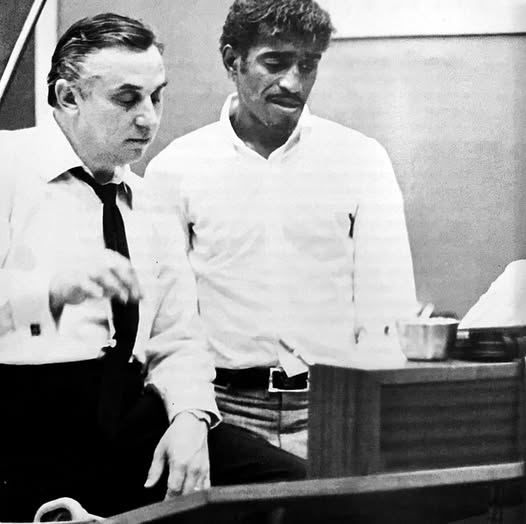
Marty Paich was only 10 months older than Davis, but he had the education that Davis coveted. Paich was also a child prodigy, but he enhanced his early experiences as a pianist, accordionist and arranger with degrees from the University of Southern California and the Los Angeles Conservatory of Music. Inspired by big band swing and West Coast cool jazz, he emerged on the LA jazz scene through the Shorty Rogers and Shelly Manne ensembles. A TV gig brought Paich and Tormé together, and when the two reunited a few years later at Bethlehem Records, Tormé suggested an audacious project: a vocal cool jazz album accompanied by a 10-piece band with an instrumentation similar to the Miles Davis “Birth of the Cool” nonet and the Gerry Mulligan Tentette. The Tormé/Paich group was dubbed the Dek-tette—even when future editions used 12 or 13 musicians—and in its pure form, the group consisted of a traditional brass quintet (2 trumpets, trombone, French horn, and tuba) along with 3 saxophonists who doubled on a plethora of reed instruments, and a rhythm section of just bass and drums. Tormé relished the challenge of singing without piano or guitar, and Paich upped the ante with some of the most challenging arrangements ever created for a jazz vocalist. The arrangements included song quotes, unusual modulations and obscure songs, while hewing to the traditions of the bands led by Miles and Gerry: all of the trumpet parts were written within the staff, and the charts mixed unison melodies with short pungent chords. [A full essay on the Tormé/Paich collaborations may be found here.]
After the initial album with Tormé was completed, Paich toured Europe as the piano accompanist for Dorothy Dandridge. When he came home, he found a pile of messages from his answering service, all from other singers who had heard the Tormé album and wanted to collaborate with Paich and the Dek-tette. Paich reformed the group and for the next decade, he used the Dek-tette to back a wide variety of soloists. In addition to 4 further LPs with Tormé, the initial Dek-tette albums featured Jeri Southern, Ella Fitzgerald, the Hi-Lo’s, and Art Pepper. Those performers all had extensive musical training, but some of the performers who followed were not working at the same artistic level. Paich screened these musicians carefully, and he coached those he found suitable. Sammy Davis, Jr. became one of those featured performers after a promising rehearsal with Paich.
Up until early 1961, Tormé was the only vocalist who used the Dek-tette’s original bass/drums rhythm section; everyone else had requested the addition of piano, guitar or both. Then two new Reprise artists, Mavis Rivers and Sammy Davis, Jr., agreed to record with the reduced rhythm team. On both albums, Paich added piano only for song verses. Everywhere else, Rivers and Davis had to fend for themselves. Rivers met and exceeded the challenge on her delightful album “Mavis”, which featured the Dek-tette on all tracks. Davis’ album, cleverly titled “The Wham of Sam”, featured Davis with Morty Stevens’ big band on Side 1, and the Marty Paich Dek-tette on Side 2. There was a very noticeable difference in Davis’ performances with the two groups. Singing with big bands was familiar territory for Davis, especially with his longtime musical director Stevens at the helm. On that session, Davis sings with the raw, energetic style that his fans expected. In contrast, the Paich Dek-tette was a new—and somewhat frightening—experience. Davis holds back (undoubtedly on Paich’s suggestion) and his focused performances make these tracks some of his finest recorded work.
There could hardly be a better introduction to the Davis/Paich recordings than the LP’s Side 2 opener, “Bye Bye, Blackbird”. Paich drew inspiration from the melancholy Miles Davis recording but added new elements for a spare and effective two-chorus arrangement. Bassist Joe Mondragon opens the track alone and Davis enters a few seconds later. Davis’ approach is simple and sincere. He sings with a full tone and without any edge to his voice. Still singing with only the bass, he snaps his fingers on the offbeats. He sticks to the original melody and lyrics, adding a note or word only when it enhances the song’s message. Drummer Mel Lewis enters with a simple ride cymbal pattern, and the three men complete the first chorus on their own. At the beginning of the second chorus, the horns enter with a modulation, and then Paich’s ensemble figures dance alongside Davis’ melodic statement. Davis steps aside at the second bridge as the horn’s variation peaks. In the final moments of the track, we return to where we started with voice, bass, drums and finger snaps. The horns add a single chord to close things out.
“Thou Swell” opens with the verse, and here, the background for Davis’ tender vocal alternates between Paich’s piano and the Dek-tette. Then Lewis stirs up a raucous fast tempo, and Davis charges into the main theme. He adds some edge back to his voice for a moment, then remembers himself and retreats to full voice. He locks into the Dek-tette’s rhythm and perfectly enunciates Lorenz Hart’s splendid lyric. Trumpeter Jack Sheldon and alto saxophonist Bud Shank each take brisk 16-bar solos. Lewis adds a two-bar drum break before Davis successfully leads into a new key with an unassisted modulation. The horns back the vocal with powerful riffs and punched chords before Davis adds a brief scat coda. “Can’t We Be Friends” is presented in a sexy medium-tempo arrangement which gives Davis plenty of opportunities to sing with the rhythm alone. Close listening reveals Davis’ great rhythmic flexibility against the solid ground beat. Shank and Sheldon are featured again, and after listening to the solos, go back to catch Paich’s warm voicings in the accompaniment including his distinctive lines for Red Callender’s tuba.
“Blame It on My Youth” is the masterpiece from this session. It opens as an ordinary ballad, with Paich backing Davis’ verse on piano. When the verse ends, Paich stands up to conduct, and the only sounds that follow are Mondragon’s bass, Lewis’ brushes and Davis’ solo voice. The tempo is so slow that Mondragon plays one note every two seconds, and in this context, the space between those notes makes Davis sound like the loneliest man on Earth. The horn backgrounds which enter later in the opening chorus support Davis without drawing attention to themselves. Bill Perkins’ tenor solo is also played against the spare rhythm background, creating a musical connection between voice and instrument. This beautiful treatment must have pleased the song’s famously cynical composer, Oscar Levant, and it’s hard to imagine any listener left untouched by its deep emotional impact.
The lightly swinging “Let There Be Love” offers a fine change of mood. The horns’ introduction sets a lyric phrase against a punch figure and the ideas are combined and developed as Davis sings the melody. Following the alto and trumpet solo, Paich unveils another of his trademarks: an extended song quote played in counterpoint with the original song. This time, the quote is Charlie Barnet’s “Skyliner”, and Davis, singing “Let There Be Love” by himself, does all he can to hold his ground against 8 horns. Listen closely to hear Davis holding final notes to full length to prevent losing pitch. Davis emerges unscathed, and he celebrates with a little quote of his own: a string of quarter notes leading to the children’s taunting theme (best known to modern audiences as the commercial jingle “Ring Around the Collar”). It was Davis’ way of telling Paich and the Dek-tette OK, I met your little challenge; now don’t do that to me again. If that was indeed the message, Paich received it, and he never added another extended song quote into a Davis arrangement.
The final track on the side (and the last track recorded at the session) was “Soon”. Paich opens the chart with an ascending scale played by French hornist Vince De Rosa. All Davis had to do was match pitch with De Rosa’s final note and he would be in the same key as the Dek-tette. Apparently, Davis miscounted and entered one note early. He scooped the pitch up a half-step to match the horn. It seems odd that this mistake was allowed to stand, but perhaps studio time was running short, and this was the best available version. To Davis’ credit, he recovered quickly and delivered a convincing performance of the Gershwin standard. Paich’s setting is as comfortable as a favorite sweater, and during the final chorus, the orchestration features more of his wonderful writing for tuba.
The next Davis/Paich album was “Sammy Belts the Best of Broadway” and it shares a similar concept as the 1960 Paich masterpiece “Mel Tormé Swings Shubert Alley”. While Tormé’s playlist featured Broadway songs from “Oklahoma” and later, Davis’ album included songs from earlier shows. On these sessions, the Dek-tette’s instrumentation ballooned to 13 jazz musicians (including Jimmy Rowles on piano, Bill Pitman on guitar and Larry Bunker on auxiliary percussion) and in places, a small string section.
“Sammy Belts the Best of Broadway” opens with “Too Close for Comfort”, a song that Davis introduced in the show “Mr. Wonderful”. Compared to the version on “Shubert Alley”, the tempo is brisker and the setting is less complicated. Davis is very comfortable here, striking a fine balance between his edgy stage voice and the full sound he produced on “Wham of Sam”. The track starts like “Bye Bye, Blackbird” with voice and finger snaps, this time with the sole accompaniment of Bunker’s congas. Eight bars later, a high-hat pickup ushers in the Dek-tette, playing background figures lifted from the Tormé recording. Davis’ energetic reading sticks close to the melody in the first chorus, but after Rowles’ sparkling piano and a brief Dek-tette variation, Davis takes more liberties with the tune. At the coda, Davis tosses in a non sequitur which is such an eloquent summation of Davis’ persona, I decided to include it as part of this article’s title.
Apparently, “My Romance” took between two and three dozen takes to produce an acceptable master. The original LP notes states that Davis sang new variations on every take and never repeated an idea. It is not clear whether Davis, Paich or producer Neal Hefti asked for multiple retakes, but there may have been another issue in play: For the first and only time on a Dek-tette record, Paich composed passages in the style of the George Shearing Quintet. On Shearing’s popular recordings, the audio balance between vibes, guitar and piano was set precisely so that the three instruments sounded as one; the Reprise engineers captured the effect, but it may have taken a few test runs to get it right. Paich’s arrangement supports the singer at every turn. At one point, a phrase that sounds like an improvised vocal variation is actually written—and doubled by the vibes. Paich’s chart also features warm brass backgrounds, lovely passages by the saxes with Vince De Rosa’s French horn in the lead, and a stunning mid-phrase modulation. Whatever occurred on the earlier takes, the flawless master made the extra work worthwhile.
In the musical “House of Flowers”, the song “Two Ladies in de Shade of de Banana Tree” is deliberately ironic: the ladies are two prostitutes relaxing outside of their bordello. The women do nothing special: one sips on a beer while the other trims her toenails. Meanwhile, the village men go crazy with lust. Paich and Davis throw irony to the winds and present the song as a manic romp. The antic tempo barely allows Davis to enunciate Truman Capote‘s intricate lyrics while the Dek-tette’s orchestration sounds like it was lifted from a cartoon score. While it is not mentioned in the lyric, the prevailing image is of Jerry Lewis chasing scantily-clad models all over the beach (and Davis even includes an allusion to Lewis’ famous tagline, “Hey Lady!”) The only sense of calm comes from the sustained legato chords played by the strings. The entire performance is politically incorrect these days, but in the Swinging Sixties, it represented s a fairly common attitude.
Paich’s brilliant setting of “Falling in Love with Love” alternates between two tempos. The breathlessly fast first chorus swings under the propulsive energy of the Mondragon/Lewis rhythm team, while a legato saxophone melody is set against an insistent trumpet riff. With so much going on in the background, Davis’ vocal sticks close to the melody. At the final turnaround of the first chorus, Lewis leads the Dek-tette into half-speed for an inventive Paich variation which displays the group’s rich tonal palette while extending the song form. Davis relaxes into a half-chorus of the medium tempo before the Dek-tette returns to the fast pace. The coda jumps between the two tempi before arriving at the final chord.
On the four Dek-tette tracks on Side 2, Davis displays his well-honed gift of selling great songs. Paich’s charts hew closely to the Broadway orchestrations—with a few notable alterations, especially Larry Bunker’s xylophone lead on “Something’s Coming“, and his exciting conga background in the final portion of “There is Nothin’ Like a Dame“. “That Great Come-and-Get-It Day” has a swinging gospel feel fueled by Lewis’ strong backbeats. The highlight of all these pieces is “A Lot of Livin’ to Do”, which is also the only Paich Dek-tette chart that we have on video. The performance comes from a 1964 BBC telecast, and while Davis makes a big deal of conducting the band, the musicians did not follow him as he cued the notes of the background riff instead of giving a steady beat. Unlike the Broadway orchestration, Paich keeps the trademark riff going throughout the arrangement. The combination of the insistent rhythm and Davis’ passionate delivery makes this recording one of the definitive renditions of this Broadway standard.
The sessions between July 1961 and November 1962 also included six Davis/Paich/Dek-tette tracks that were scattered (and sometimes duplicated) over different albums. “The Shelter of Your Arms” included four: a well-crafted medium swing arrangement of “Make Someone Happy“, a breezy “Guys and Dolls” (with Davis singing one chorus for each gender), “Come On Strong” featuring Paich counting off the tempo but little else of musical interest, and a dismal “The Party’s Over” where the Dek-tette doesn’t enter until the second half of the chart and then only with half-hearted performances of Paich’s overused riffs. An album collecting “What Kind of Fool Am I” and other Davis singles includes a charming version of “Someone Nice Like You” (from “Stop the World, I Want to Get Off”) and a superb version of Cole Porter’s “Begin the Beguine” sung flawlessly—and complete—to the sole accompaniment of Larry Bunker on congas and Mel Lewis on drums.
The final Dek-tette recording with Davis was a 1963 remake of Mel Tormé’s “California Suite” which occupied the entire first side of Davis’ all-Tormé LP. The Dek-tette appears only on this 24-minute reduction of the Suite, and much of the best instrumental material from the 1957 Bethlehem version was cut to make way for a bizarre and unfulfilling framing device. Instead of an orchestral introduction, the Davis version fades into a New York City party (Tormé is listed as one of the partiers, so he must have been onboard with this concept). “The Easterner” is played by actor Eddie Ryder, who boasts all about the locations—but not the actual content—of New York’s greatest tourist attractions. Davis tells Ryder all about California’s features, with shortened versions of the Suite’s songs dropped in. Davis’ renditions of the songs are spirited, and he adds some very funny asides to the text. However, we never find out if Ryder is convinced in the slightest about California, as Ryder never utters the Easterner’s line from the Tormé version: “Hey you sold me!” Despite its unique moments, the Davis version is no match to Tormé’s original.
The Marty Paich Dek-tette did not last much longer. The Beatles and the British Invasion turned America’s musical tastes upside-down, and jazz’s popularity quickly faded. Paich only used the Dek-tette on two further albums, André Previn‘s 1964 “The Popular Previn: André Previn Plays Today’s Big Hits“—which despite its title, contained nothing by Lennon and McCartney—and Ella Fitzgerald’s 1966 “Whisper Not“, one of Fitzgerald’s better late-career efforts. When Tormé hosted a 1967 episode of the TV series “Something Special”, he recruited member of the Stan Kenton band to recreate two of Paich’s best arrangements (the videos can be found here). In 1980, Paich assembled a group with similar instrumentation for a Sarah Vaughan LP of Beatles songs, but—perhaps thankfully—the band sounded nothing like the classic Dek-tette. Finally, in 1988, Tormé and Paich reunited with a new edition of the Dek-tette for two Concord Jazz albums, the last recorded live in Japan. When I worked with Paich to prepare my Master’s Thesis on the Dek-tette, he said that he wanted to record several contemporary singers with a new version of the Dek-tette. Unfortunately, those projects never came to fruition. Marty Paich died of pancreatic cancer on August 12, 1995. Sammy Davis, Jr. died of throat cancer on May 16, 1990. The legacy of the Davis/Paich/Dek-tette collaboration lives on through streaming, where all of the albums are available online.
The recording dates for the Sammy Davis, Jr/Marty Paich collaborations vary wildly between written and online sources. However, if they can be trusted at all, there is a unique confluence between some of these recordings and the author’s personal life. Apparently, some of these tracks were recorded on the evening of July 19, 1961 in Los Angeles. On that same night in Kankakee, Illinois, Mrs. Jeanne Marie Cunniffe gave birth to her first child, a 8 pound, 4 ounce baby boy named Thomas William Cunniffe.
The recordings embedded in this article are presented for educational and illustrative purposes. Jazz History Online neither owns nor controls the rights to this material. All rights belong to the original copyright owners.